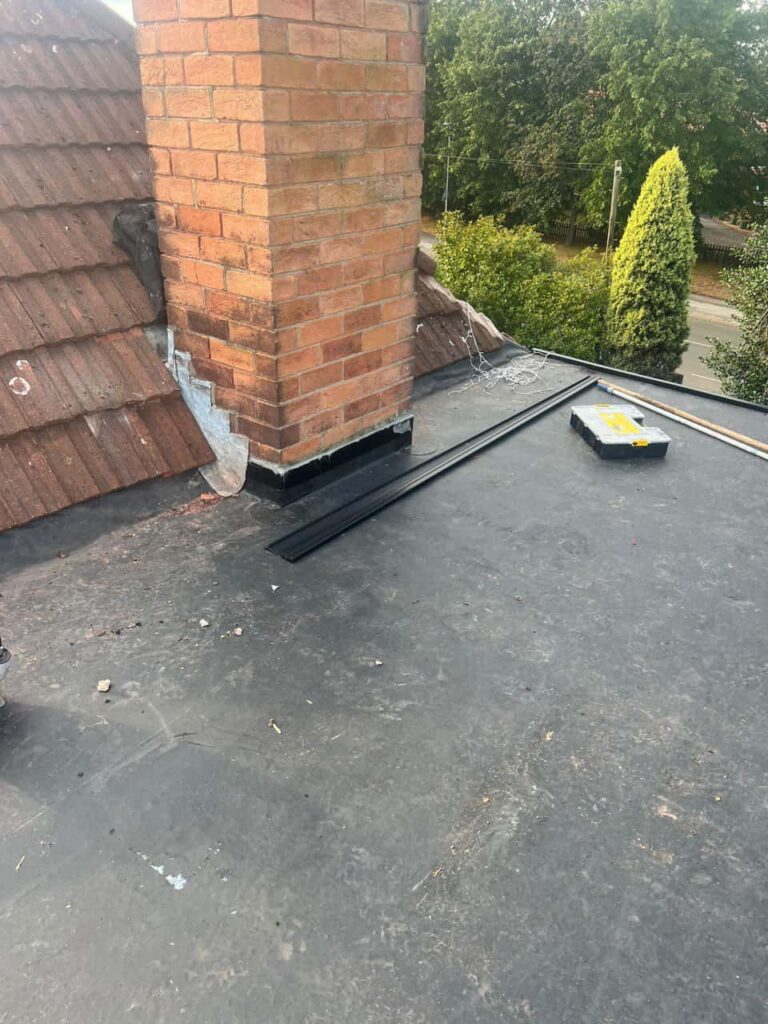
Flat roofs are a practical roofing solution for many properties, particularly extensions, garages and other areas where a traditional pitched roof may not be suitable. Despite their name, flat roofs are normally constructed with a slight fall to help rainwater move towards the appropriate drainage points. When correctly installed and maintained, they can provide dependable protection for many years.
Like every roofing system, however, flat roofs can develop problems as they age. Because water moves away from a flat roof more slowly than it does from a steeply pitched surface, defects affecting the covering, joints or drainage can become particularly important.
For homeowners in Nettleham, Lincolnshire, understanding the common signs of flat roof deterioration can make it easier to arrange repairs before a relatively localised problem spreads. At Nettleham Roofing Repairs, we inspect and repair flat roofs with careful attention to identifying the underlying cause rather than simply treating the most visible symptom.
Why Do Flat Roof Problems Develop?
Flat roofs are continually exposed to rain, sunlight, frost, wind and changing temperatures. Over time, this exposure can affect the condition and flexibility of the roofing materials.
Problems can also develop because of poor drainage, movement within the roof structure, ageing joints or weaknesses left by an earlier installation.
The following are some of the most common flat roof problems homeowners should understand.
1. Standing Water and Poor Drainage
One of the most recognisable flat roof problems is ponding water. This occurs when rainwater remains on sections of the roof rather than draining away effectively.
Small amounts of water immediately after rainfall are not necessarily an indication of failure, but persistent areas of standing water deserve attention.
Ponding can develop because of:
- Inadequate falls
- Blocked drainage points
- Localised settlement
- Movement within the roof structure
- Uneven areas in the roof covering
Water that repeatedly collects in the same location can place additional demands on the roofing material and highlight existing weak points.
2. Cracks and Splits in the Roof Covering
Flat roof coverings naturally experience expansion and contraction as temperatures change. After years of repeated movement and weather exposure, some materials can begin to crack or split.
Even a relatively small opening can create a route for moisture to reach the layers beneath the visible surface.
Cracking should therefore be assessed according to its extent and cause. A small isolated defect may be suitable for repair, whereas extensive cracking across an ageing covering may indicate broader deterioration.
3. Blistering and Bubbling
Raised bubbles or blisters can sometimes develop beneath flat roofing materials. These areas can form when air or moisture becomes trapped between layers of the roofing system.
Blisters do not always cause immediate water ingress, but they can create vulnerable areas. Continued movement, temperature changes and weather exposure may eventually cause the raised section to split or deteriorate.
Professional inspection can determine whether the affected section can be repaired or whether a wider area needs attention.
4. Damaged Joints and Seams
Depending on the roofing system, flat roofs can contain joints, seams and overlaps where different sections of material meet.
These areas require careful installation because they form part of the roof’s weather-resistant barrier. As the roof ages, movement and deterioration can cause joints to weaken or separate.
Once this happens, moisture may find a route beneath the covering even when the surrounding material still appears to be in reasonable condition.
5. Problems Around Roof Edges and Upstands
The main surface is not the only area that requires attention. Flat roofs contain important details around edges, walls, outlets and other junctions.
These locations can experience different types of movement and may be particularly vulnerable if the original detailing has deteriorated.
Signs of problems can include:
- Lifting materials
- Open joints
- Cracking around junctions
- Loose edge details
- Visible gaps
For properties in Nettleham, Lincolnshire, inspecting these less obvious areas can be just as important as examining the main roof covering.
6. Water Ingress and Internal Damp Patches
A damp patch on a ceiling is often the first indication homeowners receive that something is wrong with a flat roof.
However, the visible damp area does not necessarily identify where water is entering. Moisture can travel beneath the covering or through different roof layers before appearing internally.
This is why simply repairing the area directly above a ceiling stain does not always resolve the problem.
A professional roof inspection aims to identify the actual point of entry and understand why the leak has developed.
7. Deterioration Around Roof Penetrations
Any feature passing through a flat roof creates an additional junction that needs to remain weather-resistant.
Vents, outlets and similar details can become vulnerable if the materials around them crack, separate or deteriorate.
Because these locations interrupt the main roof covering, they should form part of any thorough flat roof inspection.
8. Loose or Lifting Roofing Material
Sections of a flat roof covering can sometimes begin to lift or become detached. This may occur around edges, joints or previously repaired areas.
Once material is no longer securely positioned, it becomes increasingly exposed to weather and moisture.
Lifting should be investigated promptly because continued movement can enlarge the affected area and compromise surrounding sections.
9. General Age-Related Deterioration
Sometimes there is no single obvious defect. Instead, the flat roof gradually becomes less dependable as several components age together.
You may notice:
- Increasing surface cracking
- Several previous repairs
- Deteriorating joints
- Recurring leaks
- Changes in the appearance of the covering
- Multiple areas requiring attention
When deterioration becomes widespread, repeatedly repairing isolated sections may no longer address the condition of the roofing system as a whole.
Can Flat Roof Problems Be Repaired?
Many flat roof problems can be repaired successfully, particularly when the defect is identified early and the surrounding roof remains in good condition.
The appropriate solution depends on factors such as the location of the damage, the condition of the existing covering and whether the problem is isolated or widespread.
A professional assessment can establish whether a targeted repair is likely to provide a dependable result or whether more extensive work should be considered.
Why Early Flat Roof Repairs Matter
Minor defects rarely improve by themselves. A small split, deteriorated joint or drainage problem can gradually allow moisture to affect a larger section of the roof.
Early attention can help protect:
- The roof covering
- Underlying roofing layers
- Roof timbers
- Insulation
- Interior ceilings and finishes
It can also prevent a straightforward repair from developing into a more extensive roofing problem.
Why Professional Inspection Is Important
Flat roof leaks can be difficult to diagnose accurately because the location of visible water damage may differ from the point where moisture originally entered.
At Nettleham Roofing Repairs, we inspect flat roofs throughout Nettleham, Lincolnshire with the aim of finding the cause of the problem rather than simply covering the visible defect.
By assessing the roof covering, joints, edges, drainage and surrounding details, we can determine the most appropriate repair approach and help restore reliable weather protection.
Conclusion
The most common flat roof problems include standing water, cracks, splits, blistering, deteriorating joints, lifting materials and leaks around vulnerable junctions. While many of these defects can be repaired effectively, leaving them unattended can allow deterioration to spread into surrounding parts of the roofing system.
For homeowners in Nettleham, Lincolnshire, the key is to investigate changes in the condition of a flat roof before they develop into recurring leaks or widespread damage.
If you have noticed cracking, standing water, lifting materials or signs of a flat roof leak, contact Nettleham Roofing Repairs. We can assess the condition of your flat roof, identify the underlying problem and recommend an appropriate repair to help keep your property in Nettleham, Lincolnshire protected.
Call us on: 01522 305 995
Click here to find out more about Nettleham Roofing Repairs
Click here to complete our contact form and see how we can help with your roofing needs.